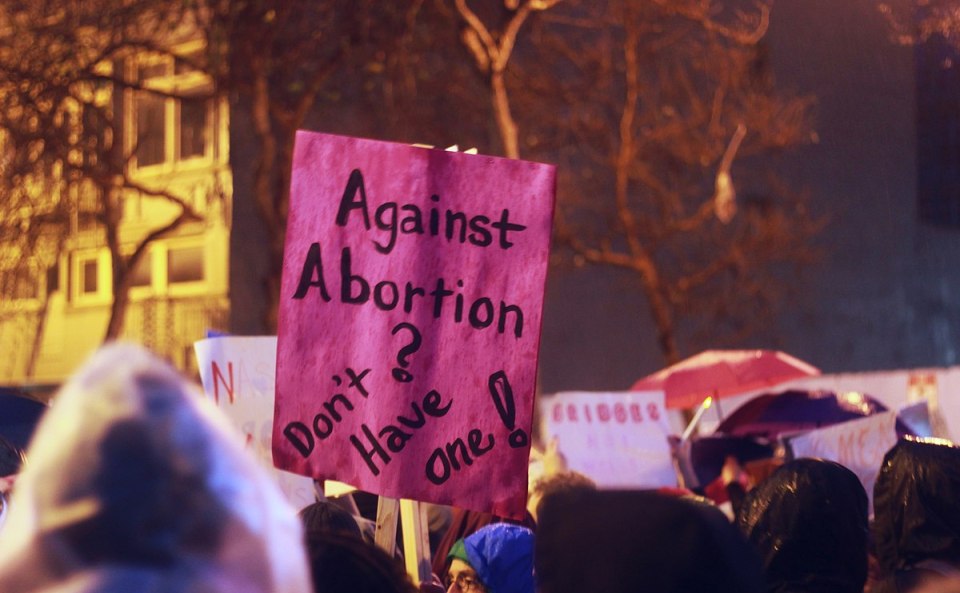
Yesterday, Ben Fordham – popular 2GB personality and Australian Ninja Warrior Host – committed the type of gaff that could only ever really come from a rapid morning national radio interview. The infamously conservative premier of New South Wales Gladys Berejiklian – she of the “waste not, want not” approach to pill testing and drug criminalization – was holding Fordham’s court on the topic of abortion, which of course lead to Fordham asking the premier if she herself would get an abortion. Natch.
This, of course, has turned into a beat-up of Fordham for his clear verbal diarrhea, and in the true nature of modern Australian politics the entire point of the issue has now been obfuscated. There was some merit to Fordham’s question, as hamfisted as it was. According to a 2018 public health survey, three quarters of NSW residents don’t even realize abortion is illegal in their state, and just as many would want to see it legalised and regulated.
This sad yet unsurprising statistic belies the current Australian collective trait of basically ignoring the nuances of politics and going with your gut. Call it a generalization, but I believe so many people don’t know about New South Wales’ abortion laws because so many people don’t care. It’s an issue that for the most part, doesn’t really affect them and, at least in the view of that slab of hard-right wing conservatives and pundits who spend way too much time paradoxically focussing on issues that have nothing to do with them, is a symptom of dole bludgers, drug addicts and unwed teens. It’s a visceral image we use to categorize a whole group of people, and like many sticking points in Australian politics, there’s a vicious fringe debate going on while the rest of us just try to get on with their lives.
Anti-abortion protesters are becoming as prevalent and newsworthy in Australia as they are in the US and, while one can’t hold a candle to the cartoon cowboy world of US politics, there are some similarities. Both groups are fuelled by a deeply-held yet muddy set of Western Christian beliefs. Both are mostly made up of older people, and both are constantly fretting over the idea that the respective governments will soon send out death squads to start mowing down any toddler not attached to a parent or guardian with one of those weird kid leashes.
Religious faith, however, can often mask a hysterical and pointless argument. Anti-abortion protesters may fight as much as they want, but it doesn’t matter. Abortion bands don’t work, and it’s pretty much common knowledge.
Last year the Guttmacher Institute, a US non-profit focusing on public health, released the numbers from their extensive research in to how abortion and its surrounding laws work in various countries. They found that, on average, the abortion rate is higher in countries where the process was illegal. According to their numbers the rate of abortions is 34 per 1000 people in countries where abortion is legal, and 37 per 1000 people where it is illegal.
According to WHO, one of the more troubling statistics is that while abortion rates have steadily been dropping in developed countries over recent years, they still remain much more prevalent in developing countries, where contraception is often unavailable if not banned, and abortion techniques are far below the par of government-backed and regulated services. Each year, around 7 million women are hopsitalised in developing countries due to unsafe abortion practices.
This all paints a picture vastly different from the narrative shared by religious groups here. Forgive the dip into the endless miasma generational warfare, but the abortion cause is often tagged as a millennial one, a nutty left-wing issue pushed by hippies, vegans and others afraid of work. But the real numbers show that the issue is a developmental and social health issue, as much as it is a social one. Those interested in the actual facts associated with abortion rather than the unwarranted fears have pointed this out for years, something which has largely lead to NSW now being the only bastion against the progression of legalizing abortion.
Of course though, the argument is not really about the actual process of abortion. It’s about what abortion means in a greater context, and as a mirror of our national zeitgeist. The debate – the insults hurled between church groups and protesters and the even worse insults hurled by shock jocks and conservative politicians – is as much about changing times. It’s about a group of people who believe in the “good old days”, a group who believes the country was on track before all this social change started happening, a group who misses the simplicity of a bottle of milk on your doorstep and the White Australia Policy. Much like the Yes vote and our national view on asylum seekers, abortion is just another chance to show how some can became so callously inhumane when they feel their personal beliefs are challenged.
As far as you or I are concerned, those protesting against any change in NSW’s abortion laws should not matter. They are a relic. They are a screaming, foaming-at-the-mouth mirror of where we used to be. Barnaby Joyce’s championing of the cause and subsequent media attention show this. Still high up on the admittedly busy list of disgraced Australian politicians, Joyce is barely months out of an infidelity scandal while he thrusts himself into the middle of e debate which is, at least according to those protecting their outdated beliefs, about family values. It’s a level of hypocrisy which, once again, sadly belies our general disassociation with the dirty side of politics.
While I generally disagree with everything Berejiklian says, thinks or does, she at least seems genuine in her belief that the people of New South Wales should decide on this legislation. But make no mistake: the abortion debate is about more than abortion. The anti-abortion group might seem small but they are as rabid as any other group trying to prevent progress, and we should see them with the same eyes we see climate change deniers and homophobes. The world will leave them behind, and we will all be better for it.
 The Red Deaf