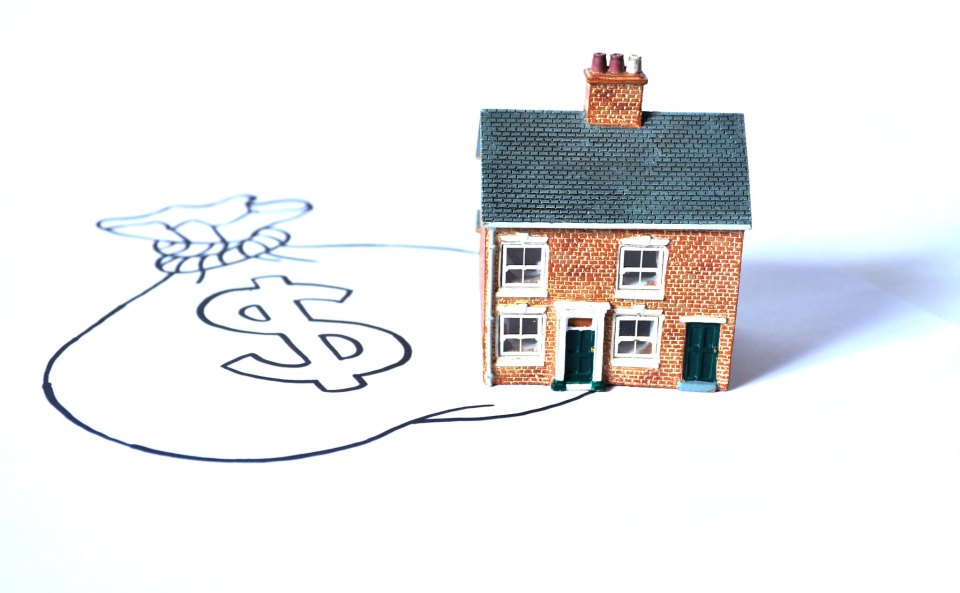
Another Reserve Bank rate increase, another cry of “what the fuck” from anyone who has a mortgage or rents in this country, which is practically everyone. The raising or lowering of interest rates has become a social event for us now, an opportunity to turn our focus away from just surviving and to all shout at a perceived enemy we can blame for how we are just surviving.
The Reserve Bank of Australia has become the bogeyman for anyone trying to achieve the Australian dream of owning property through mortgaging. And while blaming bankers occupying a building which ironically looks like low-grade tenement housing may be a temporary salve in the continuing struggle to live somewhere, it does very little to address the pervasive and underlying problems behind it. What we really should be debating is how the economic systems which define Australia and New Zealand’s policies are woefully underprepared for dealing with the ever-changing state of jobs and housing.
Back in the 40’s and 50’s, economists attempted to nail down a universal system after the changes of World War 2. Building on a Keynesian model of controlling spending to limit inflation, the purpose of the Reserve Bank of Australia has always been to balance how much we spend with how many of us don’t work; since 1975 the unemployment rate has been kept steadily at around five and six per cent via the control of cash flow. The idea is that maintaining a certain limit of unemployment limits wage growth, which in turn limits consumer spending, which then limits inflation as supply is not overwhelmed by demand. That’s a very simplistic way of putting it but our economy, along with that of many other developed countries, has relied on it to balance the books for decades. This has largely stemmed from the Phillips Curve, the statistical trending of unemployment versus inflation. The problem being that this idea depends on a clearly defined and relatively equitable market structure, where that certain level of sacrificial unemployment can be exchanged for limits on inflation. This is not our reality. It’s also a frustrating time warp we’ve seemingly lost ourselves in.
The 2008 Global Financial Crisis was a devastating combination of mismanaged fiscal policy, inability to adapt to the times and good ol’ greed. As you may remember the housing markets of the US and consequently other developed economies collapsed under the weight of defaulting subprime mortgages. Basically, banks lended money to anyone and everyone they could under the pretension that market fluidity would straighten out any defecits on the bet that the economy would continue to strengthen. What actually happened was the dawning truth that telling people they had money when they actually had debt is a bad thing. The overall damage of this wasn’t fully understood until the derivative trading on bundles of subprime mortgages was discovered, just before it wiped trillions of dollars out of the economy. If this is all a bit heavy, I recommend watching The Big Short a few times. Like me you won’t fully get your head around modern economic activity, but you will begin to understand how stupid and convoluted the whole thing is.
What we’re seeing now mirrors the biggest mistakes made in 2008. Oh, and 1990. And 1937. While certain economists and politicians love explaining to all us plebs how recessions are “necessary” to balance out surges in inflation and unemployment, there’s basically no determining how both increase at the same time. According to the economic models our systems are based on, one is supposed to counteract the other. But the housing market has basically become evidence that this thinking is beyond the scope of financial systems today. Like before 2008, the last few years have seen huge growth in the housing market here in Australia, thanks to a reinvigoration of the mortgage market and international spending. Successive governments have pushed earners to buy into the market in order to live the Australian dream. Similarly, in order to increase spending and build the national economy, there have been multiple attempts to get consumers to spend more over past decades through stimulus payments and the ongoing promotion of consumer products, something which comes back to bite us when we actually need to spend less. The result has been an ever-increasing disassociation with the prevailing economic model and the realistic trends of the country: increasing mortgages don’t emulate an increase in monetary stability; the “needed” level of unemployment does not represent a balance between those who can afford a house and those who can’t. Again, just like before the GFC, mortgages are largely being taken out by those who can barely afford it and who are far behind in a market dominated by those with too much money. Meanwhile 10 per cent of the homes in this country are vacant as of the 2021 census, a statistic that lends very little weight to the idea that housing is currently equitable.
Adding to this issue is the fact that the RBA is a very effective scapegoat for whichever political party is in power. Increasing interest rates has basically become the only way of controlling inflation because the other ways – increasing taxation and limiting wages among others – are extremely politically poisonous. The government, it seems, is more than willing for the Reserve Bank to cop the blame for whatever affects people’s ability to earn and spend. As the problem worsens, it arguably will become less likely that any party will present policy that will redirect the embedded economic process, at least before a recession makes it redundant once again.
The Australian mortgage market has always ridden on the back of a socio-political understanding that everyone wants their own back yard. This is becoming less and less achievable for a multitude of reasons, yet the drive for the Australian dream – often pushed by people whose families won out long before it became so hard to buy a house – is still a political agenda. Much like the system it depends on, our thinking needs to change if we are to escape a seemingly endless loop.
 The Red Deaf